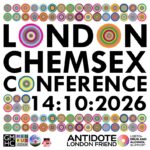
Wednesday 14th October 2026 | 9:30-4:30
Mary Ward House, 5 – 7 Tavistock Place London WC1H 9SN
The London Chemsex Conference has become a rare space where frontline practice, harm reduction and system pressures are discussed openly, honestly and in detail.
Delegate feedback from 2024 and 2025 was clear: high-quality speakers, practical learning, and cross-sector exchange made the day directly useful to the work we do.
This year’s conference responds to that feedback with a strong focus on practice. If you work in chemsex, drugs, sexual health, mental health, emergency care, commissioning or policy, this is a serious day for serious practice.
GMHC is delivering this Conference in partnership with Antidote. Antidote is the UK’s only LGBTQ+ run and targeted drug and alcohol support service. GMHC’s health and wellbeing project has had a focus on chemsex harm reduction for 15 years.
As hard as we have tried we have had to raise the cost of tickets. This reflects a larger venue with more delegate places, and professional catering. However, we aim to ensure vibe remains community focused and welcoming. We have a limited number of concessionary tickets, email admin@gmhc.co.uk for more.
A full agenda and speaker’s list to follow, but what you can expect:
- Harm-reduction toolboxes for frontline staff and services
Reduces preventable harm, improves engagement with marginalised GBMSM, and creates earlier, safer points of contact. It complements treatment by stabilising risk, reducing crises, and building trust, often the prerequisite for sustained behaviour change, healthcare access, and recovery-oriented support.
- Navigating support and treatment pathways (integrating chemsex into generic services)
Successfully navigating support and treatment pathways reduces crisis-driven care, prevents avoidable harm, and improves outcomes. Clear, joined-up routes help individuals move from chaos to stability, reduce service drop-out, and ensure clinical, psychosocial, and community supports work together rather than in isolation.
- Addressing heteronormativity in services
Improves access, relevance, and outcomes for LGBT+ people. It reduces stigma, miscommunication, and disengagement, ensuring assessments, language, and interventions reflect lived realities. Inclusive services build trust, support honest disclosure, and deliver care that is safer, more effective, and better aligned with people’s actual relationships, risks, and needs.
- Integrating lived experience in services
Balanced lived experience strengthens service relevance, credibility, and trust. It grounds policy and practice in real-world contexts without replacing clinical expertise. When properly supported and boundaried, lived experience improves engagement, challenges assumptions, and helps services design responses that are realistic, and effective rather than abstract or paternalistic.
- Cultural competences in services
Improves assessment accuracy, engagement, and safety. It enables services to understand specific norms, drugs, sexual practices, and risks without judgement. This reduces misinterpretation, builds trust, and supports interventions that are realistic, timely, and effective, rather than generic responses that fail to resonate or actively alienate people seeking help.
- Trauma-informed and neurodiversity-competent practice
Improves engagement, reduces re-traumatisation, and supports safer disclosure. It recognises how trauma, ADHD, autism, and other neurodivergences shape risk, coping, and consent. Services become more flexible, and effective, supporting regulation, safety, and recovery rather than invisibility or exclusion.
- Safeguarding, exploitation, and sexual violence
Essential for safety and accountability. It recognises power imbalances, impaired consent, and coercion, enabling earlier intervention. Clear safeguarding frameworks protect individuals, support disclosure, and ensure services respond decisively to risk rather than normalising harm or deferring responsibility.
- Drugs, the law, and policing, and statutory interfaces
Criminalisation of chemsex creates fear of police, and actively discourages people from calling 999 during overdoses or medical emergencies. This delay increases risk of serious harm or death. When health crises are treated as criminal matters, trust collapses, emergencies escalate, and preventable deaths become more likely rather than avoided.
- State on the nation chemsex briefing
Equipping delegates with a shared context, emerging trends, and the realities of service provision. Highlighting where data exists (and where it doesn’t) supports informed practice, challenges assumptions, and sharpens commissioning, policy, and clinical decision-making in a field shaped by rapid change and chronic evidence gaps.